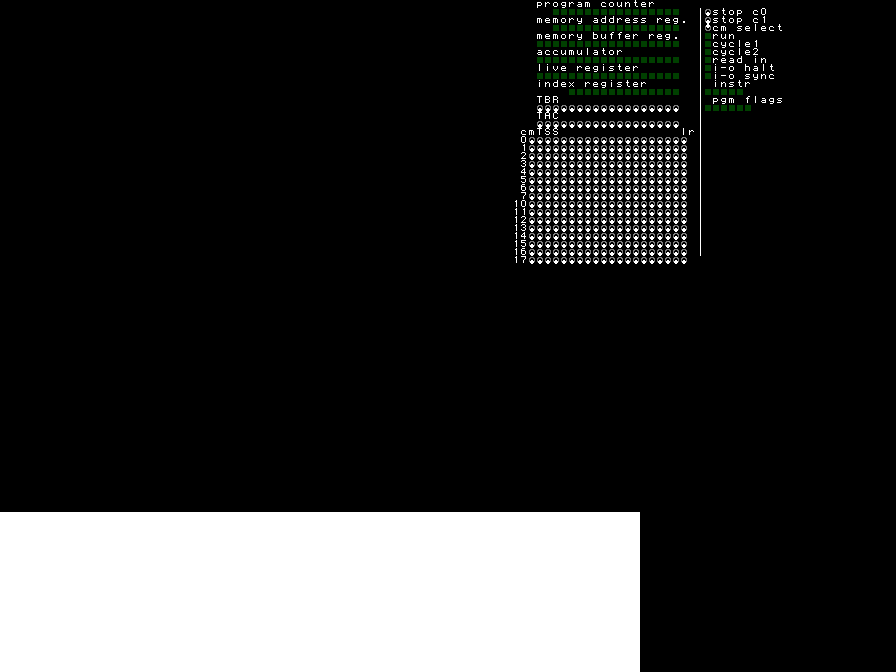
Computer published 63 years ago:
TX-0 (c) 1956 MIT [Massachusetts Institute of Technology].
The TX-0, for Transistorized Experimental computer zero, but affectionately referred to as tixo (pronounced 'tix oh'), was an early fully transistorized computer and contained a then-huge 64K of 18-bit words of magnetic core memory.
- TRIVIA -
The TX-0 was built in 1955 and went online in 1956 and was used continually through the 1960s at MIT.
Designed at the MIT Lincoln Laboratory largely as an experiment in transistorized design and the construction of very large core memory systems, the TX-0 was essentially a transistorized version of the equally famous Whirlwind, also built at Lincoln Lab. While the Whirlwind filled an entire floor of a large building, TX-0 fit in a single reasonably sized room and yet was somewhat faster. Like the Whirlwind, the TX-0 was equipped with a display system, in this case a 12 inches oscilloscope hooked to output pins of the processor allowing it to display 512×512 points in a 7 by 7in. array.
The TX-0 was a fully 16-bit computer with a 16-bit address range and 16-bit operations. Its word size was 18 bits; this allowed for 16 bits of data and two bits of instructions. These two bits could create four possible instructions, which included store, add, and conditional branch instructions as a basic set. The fourth instruction, 'operate', took additional operands and allowed access to a number of 'micro-orders' which could be used separately or together to provide many other useful instructions. An 'add' instruction took 10 microseconds.
- STAFF -
Logic designed by: Wesley A. Clark
Engineering development: Ken Olsen
- CONTRIBUTE -
Edit this entry: https://www.arcade-history.com/?&page=detail&id=102939&o=2