Manufacturers

Loading

JuJu Densetsu (Japan, bootleg)

  1. Game infos
  2. Parent and Clones
  3. Sound
  4. Driver
  5. Inputs
  6. Controls
  7. Display
  8. Dipswitchs
  9. Roms list
  10. Chips list
  11. Categories
  12. History
Download jujuba.zip (0 B)
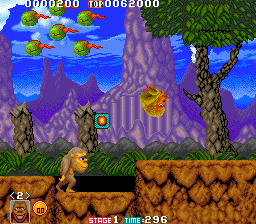
Snapshot

Game infos

Description JuJu Densetsu (Japan, bootleg)
Name jujuba
Manufacturer bootleg
Year 1989
Runnable yes
System arcade /
Number of players 2P alt
Added to MAME .111u2
Romset size 0 B
Romset file files
Romset zip 0 B
Language Japanese
Genre Platform

Parent and clones

Parent toki : Toki (World, set 1) (1989)

Sound infos

Sound_channels 1

Driver infos

Driver status imperfect
Driver emulation good
Driver color good
Driver sound imperfect
Driver graphic good
Driver cocktail
Driver protection
Driver savestate yes

Inputs infos

Input service no
Input tilt no
Input players 2
Input buttons
Input coins 2

Controls infos

type ways minimum maximum sensitivity keydelta reverse
joy 8 no

Display infos

type rotate flipx width height refresh pixclock htotal hbend hbstart vtotal vbend vbstart
raster 180 no 256 224 59.61 3906600 256 0 256 256 16 240

Dipswitchs

Roms list

console name bios size crc md5 merge sha1 region offset status optional
arcade 1.17d 131072 a027bd8e 33cc4ae75332ab35df1c03f74db8cb17f2749ead gfx2 0 good no
arcade 1.6a 65536 377153ad 1c184197b344c2b65b5842f9ba99fab776a9577b oki 0 good no
arcade 10.21g 65536 6c7a3ffe c9a266ef7a5aeaa78b4d645c4df28068bcab96d0 maincpu 40000 good no
arcade 11.1j 65536 6ad15560 707a05ac0c61a66ac65c8c3718e5d2b958da9142 gfx3 1 good no
arcade 12.2j 65536 68534844 ff4aa635e2221a552f844e30db93c73107a70cf2 gfx3 20001 good no
arcade 13.4j 65536 f271be5a c9847439f0c48f6bb710999acc172a2d6fc8d58b gfx3 40001 good no
arcade 14.5j 65536 5d4c187a b2e0e705910fe8fd230de14053513248fd76d054 gfx3 60001 good no
arcade 15.18j 65536 cb8b1d31 8dc858c4a096d71ee66541d04f8a3acb97565ac8 gfx4 1 good no
arcade 16.19j 65536 81594e0a 6390798f0829d69a70a05dbb169b0eb9183cc9a9 gfx4 20001 good no
arcade 17.20j 65536 4acd44ce 517444d22f252784ad0cb2b8948d86d4db186ae4 gfx4 40001 good no
arcade 18.21j 65536 25cfe9c3 6e649ce1f48f8e46d79f67cf43bd45d072441c77 gfx4 60001 good no
arcade 19.1l 65536 10afdf03 f1388e0f3b720ef80c395d1aa0dbb17bc3c56975 gfx3 0 good no
arcade 2.18d 131072 1aecc9d8 e7a79783e71de472f07761f9dc71f2a78e629676 gfx2 40000 good no
arcade 2.7a 65536 093ca15d 1b298146c9eea93c22c03e63513200b483b86a3f oki 10000 good no
arcade 20.2l 65536 2dc54f41 cee34fae49a60dd0009b5ed89e098f6cbfc19431 gfx3 20000 good no
arcade 21.4l 65536 946862a3 398913ccef8bd5242987c516194752ac38e10918 gfx3 40000 good no
arcade 22.5l 65536 b45f5608 fbf9f748db285f8693e0493d9b449c23cf02748b gfx3 60000 good no
arcade 23.18l 65536 06c8d622 cc2a5b255d14e9984fcadfb465aefd3be42d8dd9 gfx4 0 good no
arcade 24.19l 65536 362a0506 0a712b2c6200bbf8c01d6fa1fb2032efb1eba295 gfx4 20000 good no
arcade 25.20l 65536 be064c4b d777b560942e9f6300aed1bf22a07b381c27a479 gfx4 40000 good no
arcade 26.21l 65536 f8b5b38d 6ec60cf5259469cc9c4bdd9ffc6c63bc2785b708 gfx4 60000 good no
arcade 27.17b 131072 43a767ea bfc879ff714828f7a1b8f784db8728c91287ed20 gfx2 1 good no
arcade 28.18b 131072 d65c0c6d 6b895ce06dae1ecc21c64993defbb3be6b6f8ac2 gfx2 40001 good no
arcade 29.20b 131072 013f539b d62c048a95b9c331cedc5343f70947bb50e49c87 gfx2 80001 good no
arcade 3.20d 131072 cedaccaf 82f135c9f6a51e49df543e370861918d582a7923 gfx2 80000 good no
arcade 3.9c 32768 808f5e44 a72d04367adf428b8f0955ef6269c39eb47eee14 audiocpu 0 good no
arcade 30.21b 131072 25d9a16c 059d1e2e874bb41f8ef576e0cf33bdbffb57ddc0 gfx2 c0001 good no
arcade 4.11c 65536 a67969c4 7.m7 99781fbb005b6ba4a19a9cc83c8b257a3b425fa6 audiocpu 10000 good no
arcade 4.21d 131072 6a8e6e22 a6144201e9a18aa46f65957694653a40071d92d4 gfx2 c0000 good no
arcade 5.19e 65536 722e5183 87b813e818670bad45043db7f692619052987ce8 maincpu 20001 good no
arcade 5.19h 65536 8aa964a2 1.c5 875129bdd5f699ee30a98160718603a3bc958d84 gfx1 0 good no
arcade 6.20e 65536 826ab39d dd7696d78deac02890a7c12f6beb04edfd1158b1 maincpu 1 good no
arcade 6.20h 65536 86e87e48 2.c3 29634d8c58ef7195cd0ce166f1b7fae01bbc110b gfx1 10000 good no
arcade 7.21e 65536 b0628230 f8ed24ee53efc595e4dae13e2563021322c049e1 maincpu 40001 good no
arcade 8.19g 65536 208fb08a 113d3924d738705cb73d137712a23fa25cd4c78c maincpu 20000 good no
arcade 9.20g 65536 cb82cc33 1c774b72d12e84e9e159f66fc151f779dabbdfbd maincpu 0 good no

Chips list

name tag type clock
M68000 maincpu cpu 10000000
OKI6295 oki audio 1000000
Speaker mono audio
YM3812 ymsnd audio 3579545
Z80 audiocpu cpu 3579545

Categories

History


Arcade Video game published 30 years ago:

JuJu Densetsu (c) 1989 TAD.

The game is a typical platformer in which the player must traverse several levels with a miniboss at the end. Despite his apparent handicap - his slowness as an ape - and the fact that almost any attack can kill him, Toki is able to spit powerful shots that will help him in defeating enemies and obstacles that try to slow him down in his mission. There is a timer for each stage.

JuJu can make use of items such as power-ups for his spit: lucky rabbit feet which can give Toki bursts of super-human agility and jumping skill, clocks which add extra time to the countdown, fruit which can add to JuJu's bonus points, keys which unlock bonus areas, a special helmet that protects him from upwards attacks, extra lives, and magic coins which when collected in abundance can obtain Juju an extra life.

- TECHNICAL -

Main CPU : Motorola 68000 (@ 10 Mhz)
Sound CPU : Zilog Z80 (@ 4 Mhz)
Sound Chips : YM3812 (@ 3.579545 Mhz), OKI6295 (@ 8 Khz)

Players : 2
Control : 8-Way Joystick
Buttons : 2
=> Spit, Jump

- TRIVIA -

According to the TAD president, Tadashi Yokoyama: One day in December 1988, a freelance artist came at TAD with a portfolio of designs including this monkey. The team was motivated to do a game around this funny monkey.

On February 02, 1989, the first prototype was ready: one level, no enemies, no musics and the monkey can jump only (no shoot). At this point, they decided to reprogram the game entirely from 0. Note JuJu Densetsu was coded with the same system used by the neogeo coders at SNK.

During the first location test (at the TAD office) on September 07, 1989, many new ideas came to the developers but most of them were not included in the final product (i.e: snakes on the first stage), because lack of time.

On September 15, 1989. a public location test was done in Japan AND in the USA (University of Washington). A second test was done in October. After this test, they decided to program the end of the game (done by a non-programmer in a week-end). Note: The girl you have to save is brune in the attract mode and blonde at the end.

The game was finished on November 06, 1989.

Then, after about 10 months of development, JuJu Densetsu was finally released on December 08, 1989 in Japan by TAD. 3148 arcade boards were sold. Export releases: "Toki".

The title of this game translates from Japanese as 'Legend of JuJu'.

The devil monkey with horns from the level 2 is called Bellzador (Dev. code name: Akuma Zaru) and has the most complex AI routine. It takes 27 pages 'A4' format in the source code. Its desing and patern were inspired by Red Arremer from Makaimura.

There is some unused sprites for the character's animation in the game code.

On February 26, 1990, TAD know that pirate versions of their game appear on the market.

This was the last video game developed by TAD. A sequel was planned (JuJu 2! an action puzzle game) for the Super Famicom but the company closed its door 2 months after the JuJu Desnsetsu release. Fortunately, the source code of JuJu 2 was sold to Altron Corp. who released the game as "Little Magic [Model SHVC-LI]".

- TIPS AND TRICKS -

BAD ENDING
----------
You can reach a 'Bad Ending' if you died last life (After the 5th continue) in Stage 6 (Final Stage).

DEBUG MODE
----------
Mr. Akira Sakuma, programmer of this game, divulged this trick in October 2015. 26 years after the release in Japan!
In order to access the JuJu Densetsu hidden Debug Mode: use a hex editor, and open the file k10_4e.bin, and at offset $244, replace the '00' by '0F'.

On screen you have then the following:
AXX
BXX
MXX
TXX
IXX

A is corresponding to the visible enemies on screen
B is corresponding to the enemies loaded in memory but not visible on screen
M is corresponding to the number of enemies projectiles/shots on screen
T is corresponding to the Traps sets on screen
I is corresponding to the Items visible on screen

- STAFF -

Game Designer: Haruki Kitahara (Kitahara)
Programmers: Akira Sakuma (Sakuma), Takashi Nishizawa (Nishizawa), Tsukasa Aoki (Aoki)
Graphic Designers: H. Kakiuchi (Kakiuchi), Junichi Fujisaku (Fujisaku), Jun Matsubara (Matsubara)
Musics & Sound: Yusaku Aoki, Yukihiko Kitahara

- PORTS -

* CONSOLES:
[JP] Nintendo Famicom (jul.19, 1991) "JuJu Densetsu [Model DTF-5J]"
[JP] Sega Mega Drive (jan.31, 1992) "JuJu Densetsu [Model G-4064]"

- CONTRIBUTE -

Edit this entry: https://www.arcade-history.com/?&page=detail&id=1235&o=2